

How to Stop Hair Fall: 6-Step Ayurvedic Scalp Care Routine
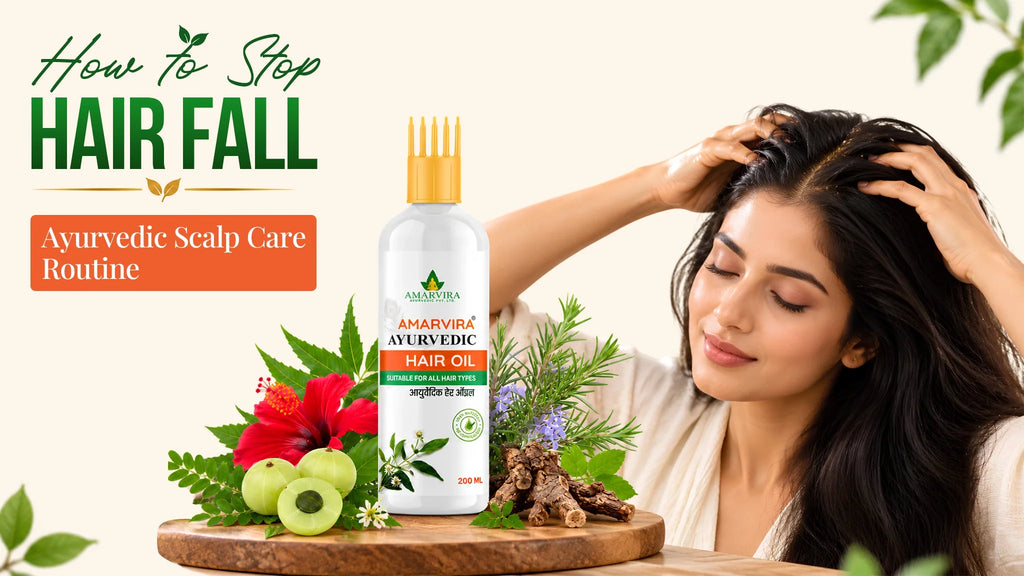
To stop hair fall naturally, follow a six-step Ayurvedic scalp care routine: a warm Shiro Abhyanga oil massage 2–3 times a week, leaving the herbal hair oil on for 1–2 hours, a warm-towel steam, a gentle lukewarm wash, a weekly herbal root mask, and iron- and protein-rich foods. Consistent practice for 8–12 weeks is usually needed to judge results.
If you have noticed more strands on your pillow, in the shower drain, or on your wooden comb, you are not alone. Ayurveda does not treat hair fall with one quick fix. It looks at the scalp environment, your digestion, your stress and your daily habits together. This guide explains the root-cause view and gives you a simple, repeatable routine, a weekly schedule and a scalp-type chart you can follow at home using a good Ayurvedic hair oil for hair growth.
Why Hair Fall Starts at the Scalp: The Ayurvedic Root-Cause View
In modern trichology, everyday shedding increases when follicles face micro-inflammation, oxidative stress, a stripped scalp barrier, or a shortened growth (anagen) phase. Classical Ayurvedic texts such as the Charaka Samhita and Ashtanga Hridaya describe hair fall (Khalitya) through three connected ideas:
-
Pitta and Vata imbalance: Vata governs movement and dryness, Kapha provides lubrication, and Pitta governs heat and metabolism. Chronic stress, late nights, spicy or fermented food and harsh weather are said to aggravate Pitta, sending excess heat to the scalp, while aggravated Vata brings dryness and brittle strands that snap during brushing.
-
Nourishment of Asthi Dhatu: Ayurveda describes hair (Kesha) as a by-product (mala) of Asthi Dhatu, the bone and structural tissue. When digestion (Jatharagni) is weak or the diet lacks minerals, healthy fats and protein, hair roots are traditionally considered under-nourished.
-
Blocked follicular channels (Srotorodha): Sweat, dust, hard-water deposits and silicones build up around the follicle opening (Romakupa). Ayurveda compares this to Ama (metabolic residue) that can keep nutrients from reaching the roots.
A routine built around a multi-herb herbal hair oil works on the scalp directly: it is traditionally used to cool excess heat, soften sebum plugs and condition the hair shaft from root to tip.
7 Classical Herbs in an Ayurvedic Hair Oil for Hair Growth
Plain or mineral oils mostly coat the outer hair surface. Traditional Taila Pak formulations combine herbs in an oil base so that cooling, strengthening and conditioning ingredients work together.
|
Ingredient |
Botanical name |
Traditional role for scalp and hair |
Dosha effect |
|
Bhringraj ("King of Hair") |
Eclipta alba |
Traditionally used to support scalp circulation and hair vitality |
Balances Pitta and Vata |
|
Amla (Indian Gooseberry) |
Emblica officinalis |
Rich in vitamin C and tannins; valued for protecting hair from oxidative stress |
Cools excess Pitta |
|
Brahmi ("Herb of Grace") |
Bacopa monnieri |
Used to calm scalp tension and stress-related shedding care |
Pacifies Pitta and Vata |
|
Hibiscus (Japa Pushpa) |
Hibiscus rosa-sinensis |
Natural mucilage that conditions dry cuticles and reduces mid-shaft breakage |
Soothes Pitta and Vata |
|
Fenugreek (Methi) |
Trigonella foenum-graecum |
Plant protein and lecithin that hydrate a flaky scalp |
Pacifies Vata and Kapha |
|
Curry Leaves (Kadi Patta) |
Murraya koenigii |
Traditionally used to nourish the scalp and support natural hair colour |
Balances Kapha and Vata |
|
Cold-Pressed Coconut Oil |
Cocos nucifera |
Low molecular weight lauric acid that reduces protein loss during washing |
Cooling (Sheeta Virya) |
Step-by-Step Ayurvedic Scalp Care Routine to Stop Hair Fall
Ayurveda prefers Satmya: steady, rhythmic habits repeated every week rather than ten different products at once. Follow these six steps in order.
Step 1: Warm Shiro Abhyanga (Therapeutic Scalp Oil Massage)
Frequency: 2–3 times per week | Duration: 8–10 minutes
Shiro Abhyanga (head oil massage) is the cornerstone of Ayurvedic hair care.
-
Warm the oil gently. Pour 2–3 tablespoons (10–15 ml) of a herbal hair growth oil with Amla, Bhringraj and Brahmi into a steel or glass bowl. Set it in a larger vessel of warm water for 2 minutes until lukewarm. Never microwave or boil herbal oils.
-
Part and apply to the scalp skin. Part dry hair into 4–5 sections and apply oil along each parting before coating the lengths.
-
Massage the key Marma points. Using finger pads, never nails, make slow circles from the Adhipati Marma (crown) to the Shankha Marma (temples) and finish at the Krikatika Marma (base of the skull).

Why this works: Gentle kneading loosens dead skin flakes, improves local comfort and helps you unwind before sleep.
Step 2: Choose Your Oil Absorption Window
Duration: 45 minutes to overnight, depending on scalp type
-
Normal to dry or frizzy scalp (Vata-Pitta): Leave the oil on for 2 hours, or overnight on a cotton pillow cover.
-
Oily, sweaty or dandruff-prone scalp (Kapha): Leave it on for 45–90 minutes only. Avoid overnight oiling if you get sticky dandruff or scalp pimples, as heavy oil can trap sebum.
Step 3: Swedana (Warm Towel Steam)
Frequency: 1–2 times per week | Duration: 8–10 minutes
Dip a clean cotton towel in hot water, wring it out until warm and damp (not dripping), and wrap it turban-style around your oiled head just before your wash. Moist warmth softens hardened sebum around the pores and makes the wash easier, so you do not need to scrub.
Step 4: Gentle, Sulfate-Free Herbal Cleansing
Frequency: 2–3 times per week | Water: lukewarm or cool
-
Skip hot water on the head. Classical texts advise against pouring hot water over the head, as heat is believed to aggravate Pitta and weaken hair roots.
-
Dilute your cleanser. Mix a mild herbal or sulfate-free shampoo with water in a mug, massage for 60 seconds with fingertips, and rinse until no residue remains.
-
Dry and comb with care. Pat dry with a cotton T-shirt or microfiber towel. Once hair is about 80% dry, detangle from the tips upward with a wide-tooth wooden comb.
Step 5: Weekly Botanical Root Mask (Shiro Lepa)
Frequency: Once a week or every 10 days | Duration: 30 minutes
-
Dry or thinning hair: Mix 2 tbsp Amla powder, 1 tbsp soaked and ground fenugreek paste and 3 tbsp fresh plain curd. Apply to scalp and roots for 30 minutes, then rinse with lukewarm water.
-
Oily or itchy scalp: Blend 2 tbsp aloe vera gel, 1 tbsp hibiscus flower powder and 1 tsp neem leaf powder into a smooth paste. Leave for 25–30 minutes and rinse well.
Do a small patch test behind the ear before using any new mask.
Step 6: Daily Dinacharya and Asthi Dhatu Nutrition
Frequency: Daily
Even the best oil cannot make up for a poor diet or chronic lack of sleep. Support your scalp from inside:
-
Eat a mineral-rich, Pitta-pacifying diet: fresh amla, curry leaves, soaked black raisins, pumpkin seeds, moong dal and leafy greens. Our guide to Moringa powder benefits and daily uses shows how drumstick leaf powder adds plant iron and calcium to dals and rotis.
-
Manage stress: Practise 10 minutes of Anulom Vilom or Bhramari pranayama each evening.
-
Protect your sleep: Aim for 7–8 hours and a regular bedtime around 10 PM so your body can repair overnight.
About Amarvira: Who Is Behind This Ayurvedic Hair Fall Guide?
Hi, I'm Nirav Patel, Owner of Amarvira, an Ayurvedic wellness brand from Surat, Gujarat. Amarvira is created under Amar Ayurveda, and our range of and herbal powders is based on classical formulations, such as our cold-pressed coconut oil based Amarvira Ayurvedic Hair Growth Oil.
We wrote this guide so you can follow a simple routine at home, whether you use our herbal hair oil or another one. Looking for Ayurvedic products near you? We ship across India from Surat. Browse our full range of Ayurvedic products and herbal products, or read our About Us page to know our story.
Ayurvedic Hair Care by Scalp Type: Vata, Pitta & Kapha Chart
Check how your scalp behaves 48 hours after a wash, then adjust your routine using this chart.
|
Scalp profile |
Typical signs |
Oiling frequency and duration |
Botanical focus |
Wash and care |
|
Dry, flaky, brittle (Vata) |
Fine white flakes, rough or split ends, tangles, shedding from breakage |
3x a week; 2 hours or overnight |
Bhringraj, fenugreek, hibiscus, coconut oil base |
Wash 2x a week at most; do warm towel Swedana first |
|
Warm, sensitive, thinning (Pitta) |
Warm or tender crown, early greying, diffuse thinning during stress or summer |
2–3x a week; barely warm oil for 1–2 hours |
Amla, Brahmi, Bhringraj, curry leaves |
Wash 2–3x a week with cool to lukewarm water; limit heat styling and spicy or fermented food |
|
Oily, sticky, greasy (Kapha) |
Greasy roots within 24–36 hours, heavy yellow flakes, flat volume |
1–2x a week; 45–60 minutes pre-wash only |
Neem, fenugreek, curry leaves; light oil application |
Wash 3x a week; never sleep with heavy oil on |
Your 7-Day Ayurvedic Scalp Care Weekly Schedule
Use this template for 8–12 weeks.
|
Day |
Morning (5 min) |
Evening or pre-wash (15–30 min) |
Internal habit |
|
Monday |
Detangle with a wide-tooth wooden comb; 2-min dry fingertip crown massage |
10-min warm Shiro Abhyanga with Amarvira Ayurvedic Hair Growth Oil |
1 tsp curry leaf chutney or 5 soaked almonds with black raisins |
|
Tuesday |
Warm towel steam, then a gentle lukewarm herbal wash; air-dry with a microfiber towel |
10 min Anulom Vilom before bed |
Warm moong dal or green vegetable soup |
|
Wednesday |
Light wooden combing from tips upward |
Scalp rest day; avoid tight buns and heat styling |
Coriander-fennel water in the afternoon |
|
Thursday |
2-min fingertip scalp stimulation on waking |
10-min warm Shiro Abhyanga (1–2 hrs or overnight) |
Pumpkin seeds, sesame seeds or moringa leaves at lunch |
|
Friday |
Gentle lukewarm wash; detangle only when 80% dry |
Screens off 45 min before a 10:30 PM sleep window |
Fresh amla or a vitamin C rich fruit as a snack |
|
Saturday |
30-min weekly Shiro Lepa (amla, fenugreek and curd mask) or pre-wash oil massage |
Rinse with lukewarm water; leave hair unstyled |
Balanced home-cooked meal; skip deep-fried or very spicy takeout |
|
Sunday |
Scalp rest; loose braid or cotton scarf outdoors |
Prep your oil bottle and wash your wooden comb |
20-minute evening walk |
6 Everyday Mistakes That Sabotage Hair Fall Control
-
Rubbing too hard during oil massage. Nails and vigorous friction can irritate skin and pull out fragile resting hairs. Move the scalp skin gently with soft finger pads.
-
Using too much shampoo to strip the oil. Harsh washing leaves hair dry. Use 2–3 tablespoons of oil, not a cupful, and one diluted wash after a warm towel wrap.
-
Combing soaking-wet hair. Wet hair is more elastic and weaker and breaks easily. Wait until it is about 80% dry.
-
Tight ponytails and damp buns. Constant pulling can cause traction hair loss, and tying damp hair can trap moisture against the scalp.
-
Switching products every two weeks. The hair cycle works over months, so give any routine at least 8–12 weeks.
-
Ignoring medical triggers. Postpartum changes, thyroid problems, iron deficiency, and low vitamin D3 or B12 need blood tests and medical care alongside scalp care.
Realistic Timeline: How Long Does an Ayurvedic Routine Take?
Ayurvedic care works gradually, so set realistic expectations. Individual results vary.
-
Weeks 1–3 (scalp comfort): Dryness, tightness and post-wash frizz may start to ease. You may notice a few loose resting hairs during oiling, which is a normal release of hairs that had already detached.
-
Weeks 4–8 (less breakage): Hair often feels softer and more elastic while combing, with fewer broken strands after washing.
-
Weeks 8–12 (fuller look): With 2–3 oiling sessions a week, gentle washing and balanced nutrition, many people notice healthier, fuller-looking hair.
How to Choose a Herbal Hair Oil for Hair Fall Control
When you compare herbal hair growth oils, look for a cold-pressed base oil, named herbs such as Bhringraj, Amla and Brahmi instead of a vague "herbal blend", and an ingredient label you can read clearly. Do a patch test before first use.
Amarvira Ayurvedic Hair Growth Oil combines Amla, Bhringraj, Brahmi, Hibiscus, Curry Leaves and Fenugreek in a cold-pressed coconut oil base. Crafted in india. For bundle packs and delivery details, see our shipping guide.
Want to go beyond hair care? Explore more Ayurvedic products and herbal powders from Amarvira.
Health disclaimer: This article is for education and general wellness only and is not a substitute for professional medical advice, diagnosis or dermatological treatment. Results vary with genetics, diet and health status. If you have sudden patchy hair loss, scalp sores, infection, or shedding linked to thyroid, hormonal or autoimmune conditions, consult a qualified physician or dermatologist.







 Retner.ai

